BugPilot — AI Bug Reporting Assistant
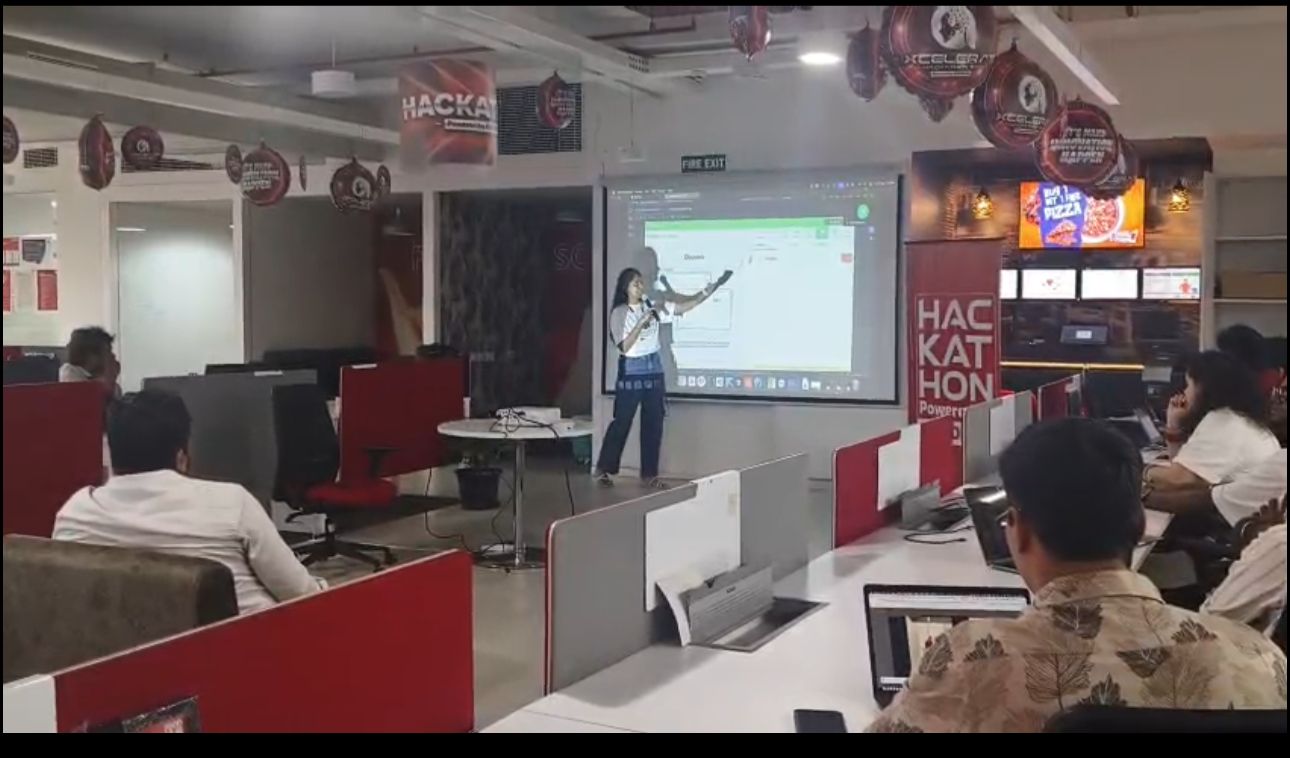
Reporting POS issues was slow and lossy. BugPilot lets anyone — client, QA, ops or developer — capture an issue in one tap; AI converts the recording into a structured, developer-ready bug report with the technical context attached. The concept placed Top 5 of 26 teams at Foodhub's AIXCELERATE Hackathon 3.0.
Reporting POS issues meant calls, messages, screenshots and back-and-forth. Details got lost and developers spent extra time reproducing the issue — delaying fixes.
One tap captures screen, voice and user actions; AI converts it into a clear problem statement with steps, expected vs actual and auto-attached logs/API data — instantly creating a developer-ready ticket.
Bug reporting shifts from 'what is the issue?' to 'here is the issue, why it happened, and everything needed to fix it' — Top 5 of 26 teams.
Product concept, problem framing & pitch
Clients, QA, operations and developers reporting POS issues
Top 5 of 26 teams — a faster, lossless path from issue to developer-ready ticket
Context
In a POS platform used across thousands of stores, issues surface from people who aren't technical — store staff, ops, support — and land on developers who need precise, reproducible detail. BugPilot was a hackathon concept aimed squarely at that gap.
Problem / Opportunity
Reporting an issue meant a chain of calls, messages and screenshots. Context leaked at every hop, and developers burned time just reconstructing what happened before they could fix anything.
User & Business Need
- Non-technical reporters needed a way to flag issues without writing a technical report
- QA and ops needed less manual documentation and fewer follow-up rounds
- Developers needed complete, reproducible context to cut investigation time
My Role
- Framed the problem and the target user segments the concept had to serve
- Shaped the end-to-end flow from one-tap capture to a developer-ready ticket
- Defined what 'complete context' means — steps, expected vs actual, logs, API data, device details
- Pitched the concept to judges, where it placed Top 5 of 26 teams
Product & Delivery Approach
- Capture: one tap records screen activity, a voice explanation and the user's actions
- AI understanding: generate a structured report — problem, steps to reproduce, expected vs actual, impact
- Auto technical data: attach application logs, the click journey, API requests/responses and device details
- Instant ticket: the finished report becomes a development ticket automatically
Constraints & Trade-offs
- AI-generated reports must be trustworthy — the design leaned on captured evidence, not guesswork
- Capturing logs and API data raises real privacy and scope questions to handle deliberately
- The reporting flow had to stay one-tap simple for non-technical users while still satisfying developers
Outcome & Impact
- A concept that reframes reporting from 'describe the problem' to 'here's everything to fix it'
- Clear value mapped to every stakeholder — clients, QA/ops and developers
- Validated by judges with a Top-5 finish out of 26 teams
Key Learnings
- A reporting tool's real product is the quality of context it hands to the next person in the chain.
- Mapping value to each stakeholder separately made the pitch land — one feature, three distinct wins.
- AI is most convincing when it's grounded in captured evidence rather than asked to invent detail.